Guide to Prevent Your Puppy from Biting
Translation not availableJuly 19, 2024
Are you worried that your puppy bites everything it finds? You are not alone. Many pet owners face this challenge. The good news is that, with the right strategies, you can teach your puppy to stop biting. In this guide, we will provide you with the tools and techniques necessary to achieve this.
First, it is crucial to understand the puppy’s behavior. Knowing why they bite will help you address the problem from its root. Then, we will present you with effective training techniques that you can easily apply at home.
Additionally, we will explore toys and items for biting that will keep your puppy entertained and away from your belongings. We will also give you tips to effectively redirect biting without stress.
Finally, we’ll talk about the importance of consistency and patience in the process. These two elements are key to successful training. Let’s get started and turn your puppy into the best friend you’ve always wanted!
Understanding Puppy Behavior
Puppies explore the world with their mouths. Biting is a natural way for them to learn about their surroundings and relieve teething pain. Understanding this will help you not to get frustrated.
Additionally, puppies also bite as a form of play. In nature, young dogs use biting to interact with their littermates. It is an innate behavior that they need to learn to control.
To effectively address the problem, it is crucial to identify the specific causes of the biting. Is the puppy bored? Too energetic? Anxious or stressed? Each cause might require a different strategy.
Observe your puppy and take notes on when and where they tend to bite the most. This will give you clues about what triggers their behavior. Once you understand the “why,” you will be better prepared to apply training techniques that work.
Effective Training Techniques
One of the simplest and most effective techniques is using the “no” command. When your puppy bites, say “no” firmly but calmly. This will help them associate the word with the undesirable action.
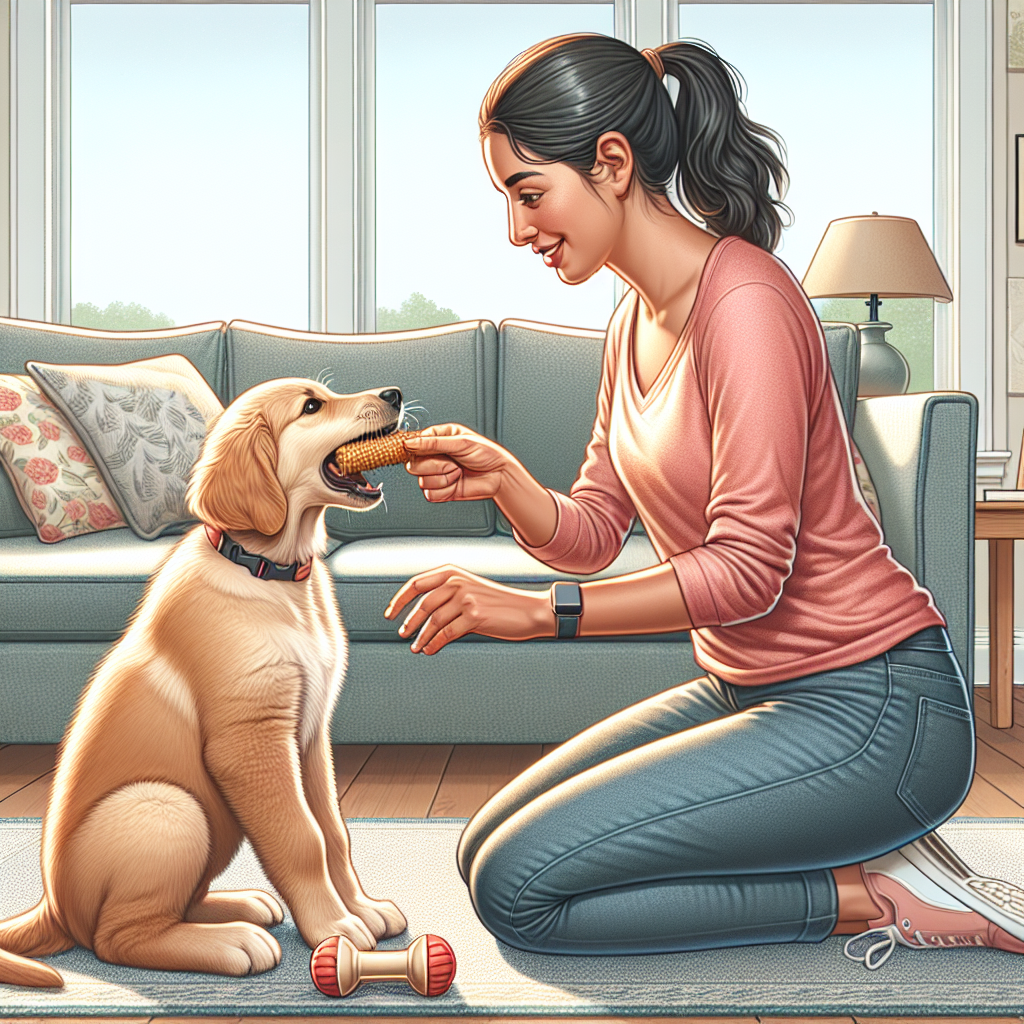
Another technique is redirecting the bite. Keep bite-appropriate toys handy and offer them immediately when your puppy starts biting something inappropriate. This will teach them what is acceptable to bite.
Reward-based training is also very effective. Reward your puppy with treats or praise when they bite their toys instead of your belongings. This positive reinforcement will encourage good behavior.
Early socialization with other dogs can help reduce biting. Interacting with other puppies teaches your pet to control their bite strength through play.
Implement timeout periods if the puppy becomes too bitey. If they bite too hard, stop the play and walk away for a few minutes. This will teach them that biting hard ends the fun.
- Use the “no” command firmly.
- Redirect the bite to appropriate toys.
- Reward good behavior with treats or praise.
- Encourage socialization with other puppies.
- Implement timeout periods when necessary.
Remember that consistency is key. Apply these techniques regularly, and you will see how your puppy learns to control their biting. Patience and love are your best allies in this process.
Toys and Items for Biting
Choosing the right toys for your puppy is crucial to prevent them from biting inappropriate objects. Biting toys are specifically designed to meet their need to chew and relieve teething pain.
Look for toys made of durable and safe materials. Rubber, nylon, and rope are excellent options. These materials withstand constant biting and pose no health risks to your puppy.
Some toys can even be filled with treats or food, adding a challenge and fun element. This not only keeps your puppy entertained but also stimulates their mind.
- Rubber toys: ideal for strong bites.
- Rope toys: perfect for tug-of-war games.
- Treat-filled toys: keep your puppy occupied and happy.
Don’t forget to provide a variety of toys to keep your puppy’s interest. Rotating the toys every few days can make each one feel new and exciting.
Always supervise your puppy while they play with their toys. This ensures that they don’t break and become a hazard. With the right toys, your puppy will quickly learn what to bite and what not to.
Tips to Redirect Biting
Redirecting your puppy’s biting can be simpler than you think. The key is to replace what your puppy shouldn’t bite with something they can bite. Here are some practical tips.
Offer attractive alternatives. Always have biting toys handy and give them to your puppy when they start biting something inappropriate. This will teach them what is acceptable to bite.
Use clear commands. When your puppy bites something they shouldn’t, use a firm command like “no” and then redirect their attention to an appropriate toy. Repetition and clarity are essential for them to understand the message.
Reinforce good behavior. Reward your puppy every time they choose to bite their toys instead of your belongings. You can use treats, praise, or additional playtime. This positive reinforcement will make your puppy want to repeat the right action.
Practice exchange games. Teach your puppy to release objects in exchange for a reward. This not only helps to redirect biting but also strengthens obedience and mutual trust.
- Always have toys available to redirect biting.
- Use clear commands like “no” to stop the behavior.
- Reward good behavior with treats or praise.
- Practice exchange games to teach object release.
These tips will not only help protect your belongings but also make your puppy happier and more balanced. Patience and consistency are your best allies in this process.
Consistency and Patience in the Process
Consistency is vital for your puppy to learn not to bite. If you change the rules or apply techniques inconsistently, your puppy will get confused. It is important that everyone at home follows the same guidelines.
Patience also plays a crucial role. Puppies do not learn overnight. It may take weeks or even months to see significant results. Stay calm and do not get discouraged if you don’t see immediate improvements.
Remember that every puppy is unique. Some may respond quickly, while others may need more time and reinforcement. The important thing is not to give up. The key is to be consistent and patient at all times.
Using positive reinforcement techniques, such as rewards and praise, can speed up the process. Celebrate every small achievement and keep reinforcing the desired behaviors. Over time, your puppy will learn what is acceptable to bite and what is not.
Lastly, do not forget to review and adjust your strategies if something is not working. Flexibility is just as important as consistency and patience. Together, these elements will help you create a harmonious environment for you and your puppy.
Training your puppy not to bite is a process that requires consistency, patience, and love. Understanding your puppy’s innate behavior will allow you to effectively address the problem from its root. Applying specific training techniques and redirecting their bite to appropriate toys are essential steps in this journey.
Always remember to provide attractive alternatives and use positive reinforcements like rewards and praise to encourage good behavior. Socialization and exchange games are also valuable tools to teach your puppy to control their bite.
Do not underestimate the importance of supervision and variety in toys to keep your puppy’s interest. Supervising their play and rotating toys every few days will make each one feel new and exciting, helping to keep their attention on what they can bite.
Be flexible and adjust your strategies as needed. Every puppy is unique and may respond differently to training. With a combination of love, patience, and the right techniques, your puppy will quickly learn the rules and become the loyal and well-behaved friend you’ve always wanted.
Cheer up and enjoy every moment of this growth stage with your puppy!

Translation not available